RxMnemonic
Antihypertensive
Losartan
Angiotensin II Receptor Blocker • Antihypertensive • No Cough
LOS = lose
+
ART-AN = angiotensin receptor antagonist
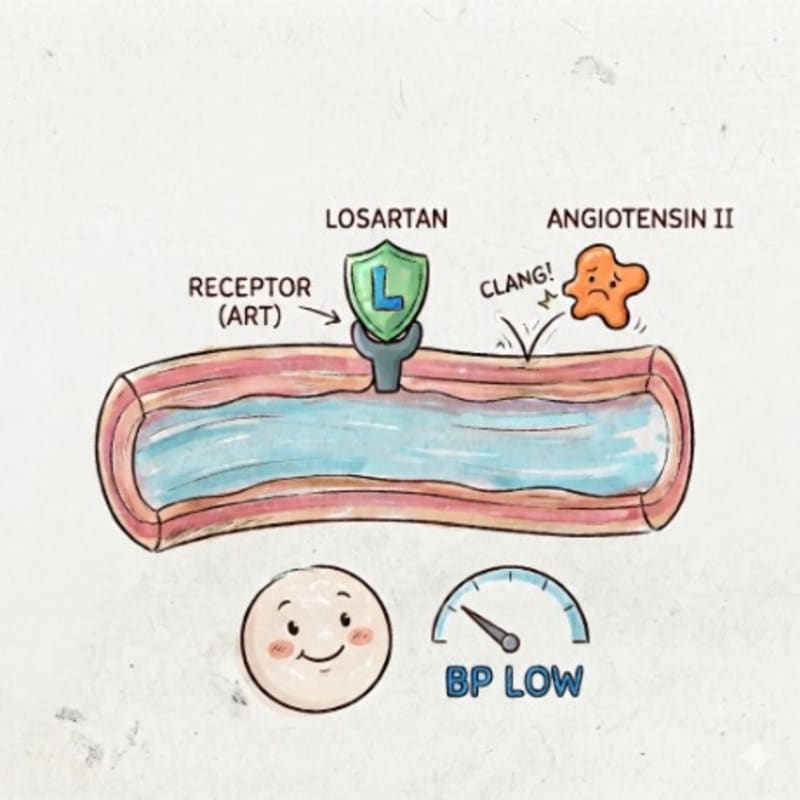
Break losartan into LOS (lose), ART (Angiotensin Receptor) and AN (ANtagonist). You lose the Angiotensin Receptor. Angiotensin II raises blood pressure by docking at that receptor and clamping the vessels tight, so losartan blocks it and that never happens. Lose the AR, vasodilation occurs, blood pressure drops.
Antihypertensive
LOS = lose | ART-AN = angiotensin receptor antagonist
HOW STEP TESTS IT
1
Losartan is an angiotensin II receptor blocker that antagonizes the AT1 receptor. Blocking it causes vasodilation and reduces aldosterone, lowering blood pressure. Every '-sartan' blocks the AT1 receptor.
2
Because it acts downstream of ACE, losartan does not raise bradykinin, so it avoids the dry cough and angioedema that make patients stop ACE inhibitors. It shares the rest of the class risks: hyperkalemia, injury in bilateral renal artery stenosis, and fetotoxicity in pregnancy.
New Drug · Every Monday
rxmnemonic.com
Brought to you by RxMnemonic
One drug. One story. Never forget it.
 Download Image