RxMnemonic
Anticoagulant
Warfarin
Vitamin K Antagonist • Oral Anticoagulant
WAR = war
+
FARIN = far in
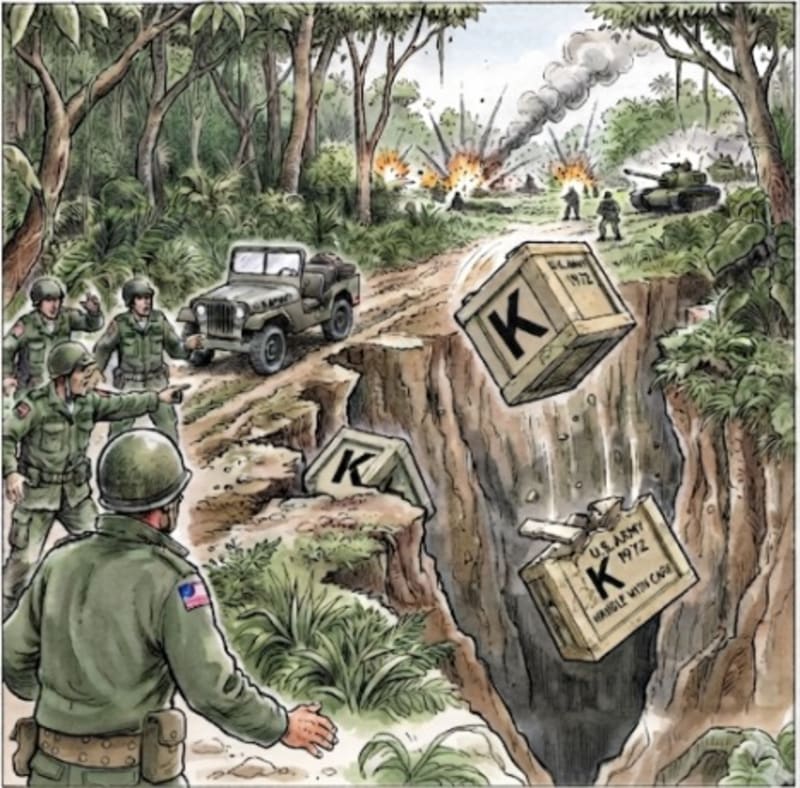
Break warfarin into WAR and FAR IN. Imagine you are far in a long war. The way you win a war is by cutting off the enemy's supply lines, and here the critical supply is vitamin K. Warfarin blocks vitamin K, so the clotting factors never get activated. The war takes place in 1972 to represent factors 2, 7, 9, 10. War far in, block the K supply.
Anticoagulant
WAR = war | FARIN = far in
HOW STEP TESTS IT
1
Warfarin blocks vitamin K epoxide reductase, so the liver can't activate the vitamin K-dependent clotting factors (2, 7, 9, 10) and proteins C and S. Its effect is delayed for days because circulating factors must be degraded first, and it is monitored with PT/INR.
2
Warfarin has a narrow therapeutic window and is metabolized by CYP450; it is teratogenic, so heparin is used in pregnancy instead. Reverse warfarin with vitamin K or PCC.
New Drug · Every Monday
rxmnemonic.com
Brought to you by RxMnemonic
One drug. One story. Never forget it.
 Download Image